Auto-Renewal
Tenor offers opt-in auto-renewal smart contracts to simplify the renewal process and minimize the likelihood of users getting liquidated at maturity.
When enabled, the smart contracts enable any third party (e.g. lender) to renew a borrower’s position in a longer-dated term or for an open-term, removing the need for manual repayment or monitoring.
If auto-rolling is disabled and the user fails to repay their position by maturity, part of the borrower's collateral can be liquidated to repay the borrower's debt.
Renewal Mechanisms
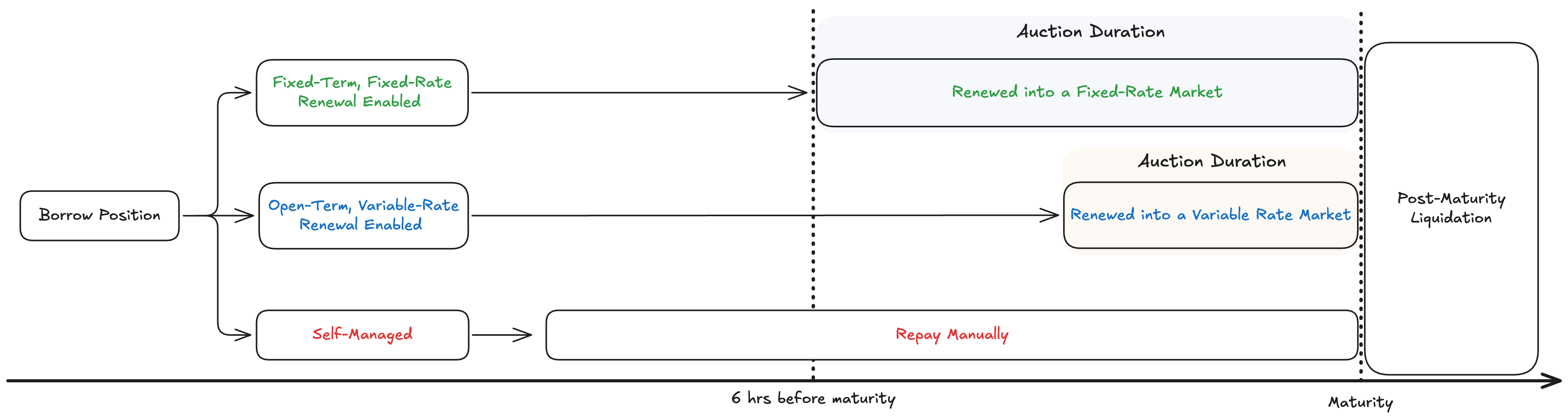
When opening a position, the user selects one of the following renewal policies:
- Open-Term, Variable-Rate Renewal
- Fixed-Term, Fixed-Rate Renewal
- Self-Managed (no auto-renewal)
Third parties (e.g. lenders) can execute renewals by matching borrowers with longer dated lending offers on their behalf as long as the parameters of the new position are within the borrower's renewal policy requirements.
Open-Term, Variable-Rate Renewal
Tenor allows users to renew their positions into a corresponding Morpho variable-rate open-term market.
Renewal Policies
Users can customize their open-term renewal policy by specifying:
- Roll period (e.g. 2 hours before maturity)
- Whitelisted Morpho V1 market IDs eligible for rolling
- Optional policy contract for custom logic and fees
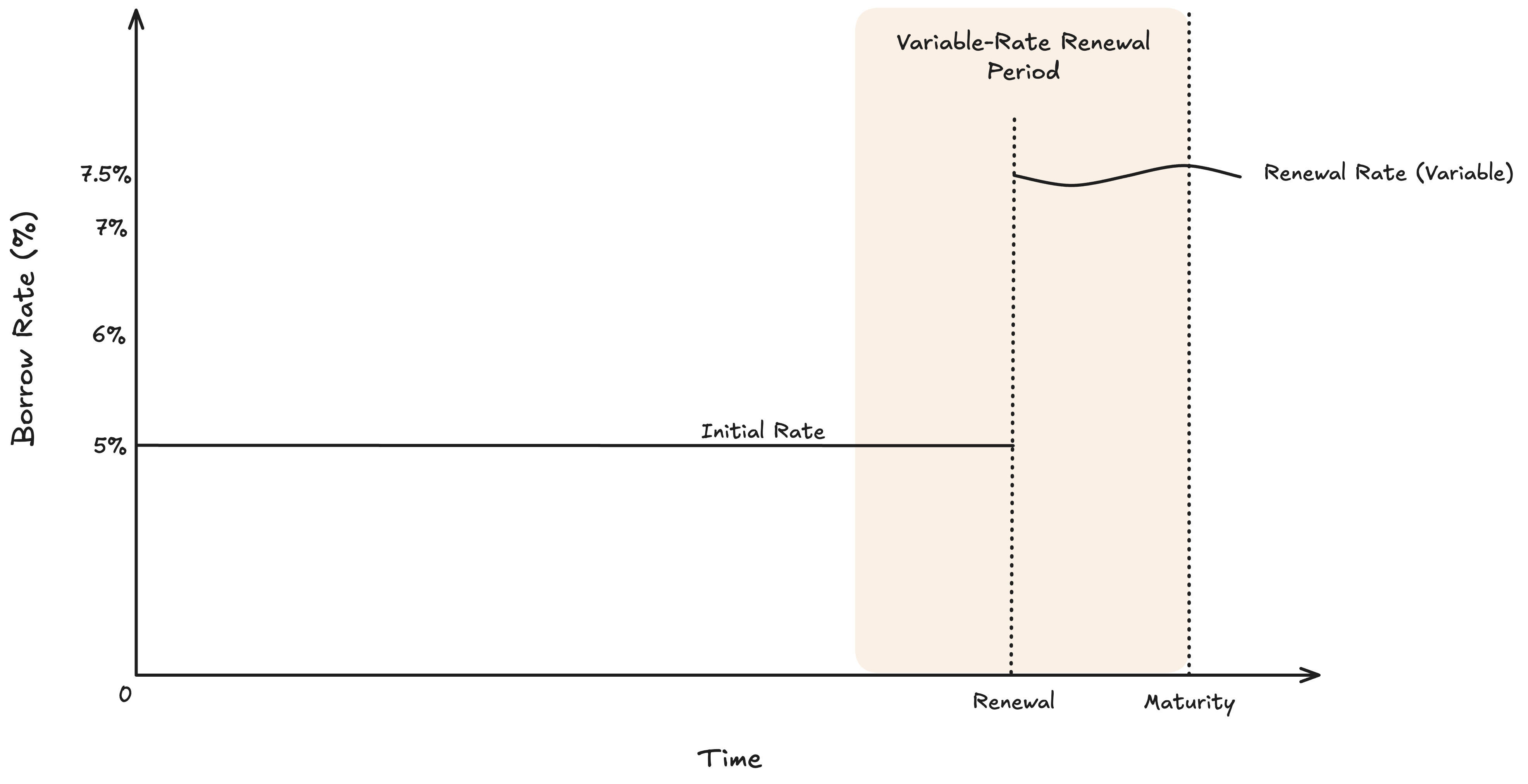
The image below shows an example of an open-term, variable-rate renewal. In this example, a borrower holds a position at 5% APR. Before maturity, a third party rolls over the borrower's position into the Morpho variable-rate market at 7.5% APR.
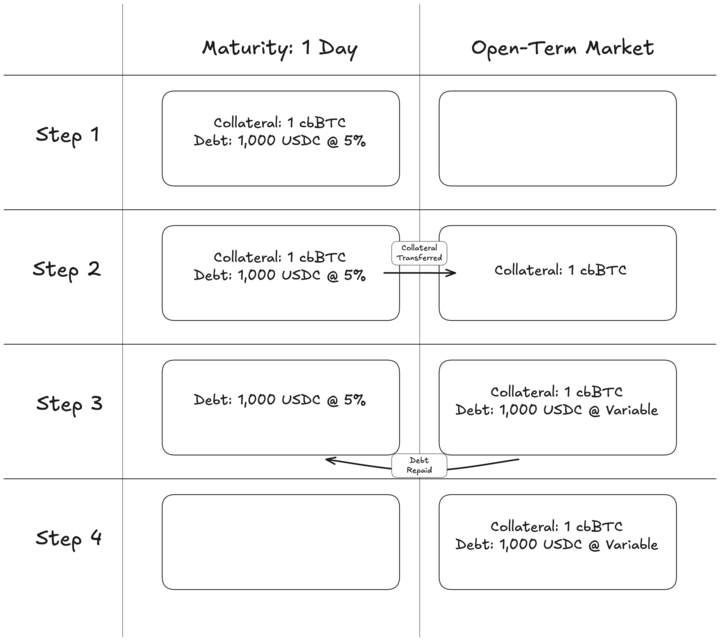
The following table illustrates the step by step process of rolling over a position into a corresponding Morpho variable-rate open-term market.
Learn more about open-term, variable-rate renewal here.
Fixed-Term, Fixed-Rate Renewal
With fixed-term, fixed-rate renewal, positions can be programatically renewed into a longer-dated fixed-rate market based on the user's renewal policy.
Renewal Policies
Users can customize their fixed-term renewal policy by specifying:
- Their preferred interest-rate auction policy
- Linear rate policy: A simple linear auction rate curve with one kink point.
- Target rate policy: A multi-kink auction rate curve.
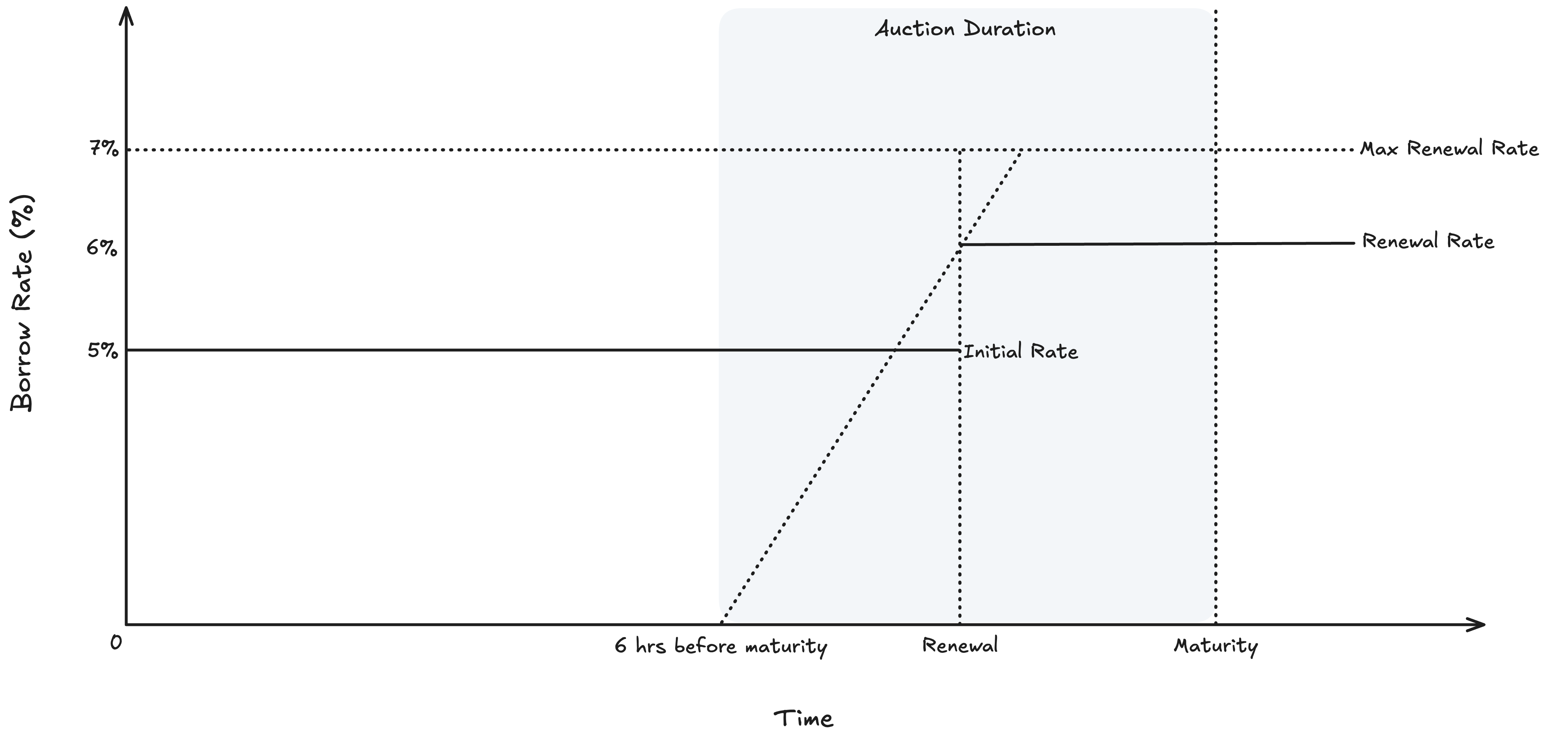
- Auction duration (e.g. 6 hours before maturity)
- Their maximum renewal interest rate (e.g. 7%)
- Their minimum renewal term length (e.g. renew for min. 30 days)
- Their maximum renewal term length (e.g. renew for max. 90 days)
The borrower can opt into different renewal policies that create an auction mechanism for the renewal rate. These policies calculate time-based auction rates that increase as the position approaches maturity. As the renewal rate increases, it creates a profit opportunity that incentivizes third parties and MEV bots to execute the roll when they find offers at lower rates in the target maturity.
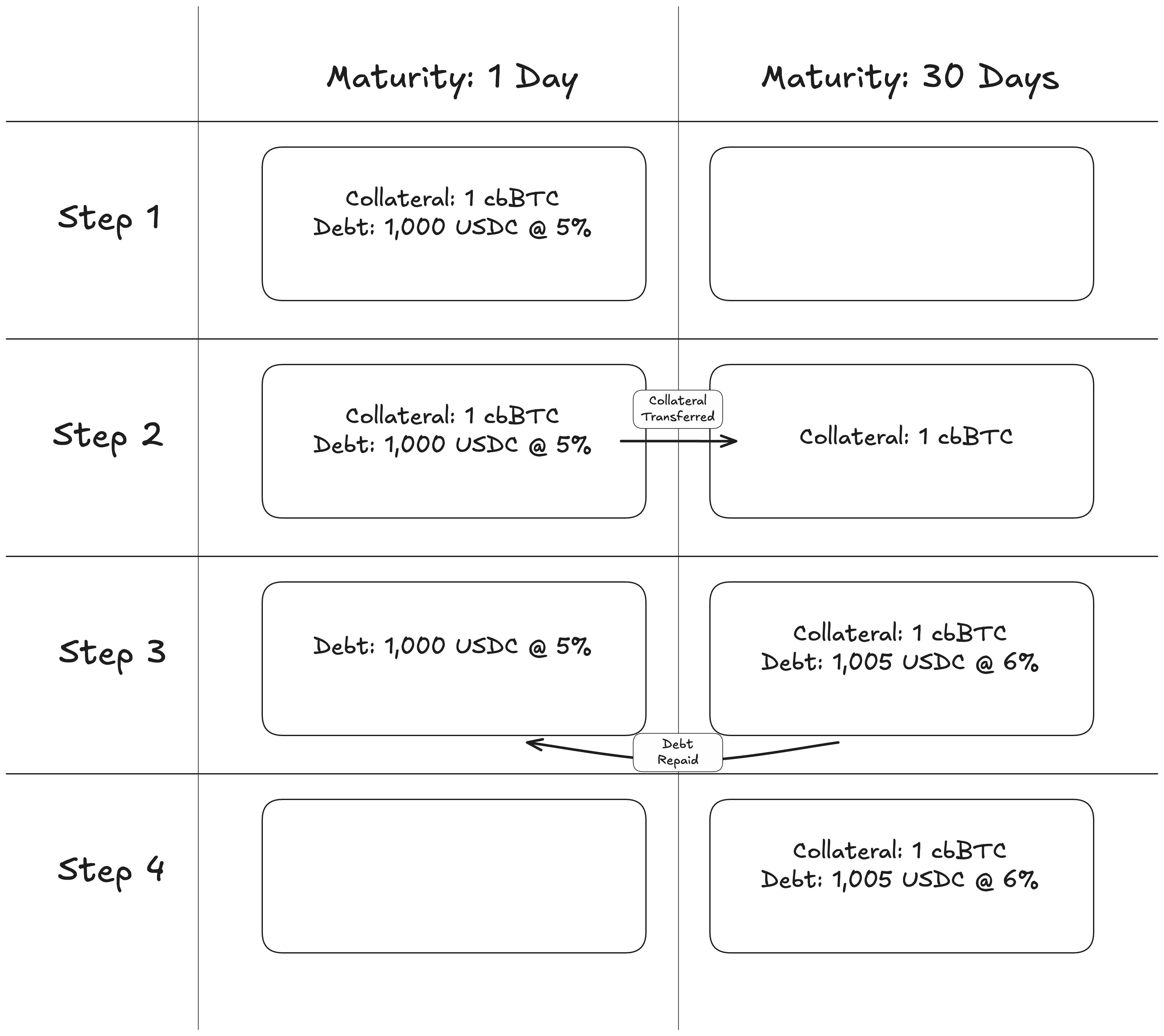
The image below illustrates how fixed-term, fixed-rate renewal works in practice. In this example, a borrower holds a position at 5% APR. An auction is held six hours before maturity to facilitate the rollover. During this period, a user rolls the borrower's position into a longer-dated maturity at 6% APR.
The following table illustrates the step by step process of rolling over a position into a longer-dated maturity at a fixed rate.
Learn more about fixed-term, fixed-rate renewal here.
Combined Renewal Policy
A user can combine the two renewal mechanisms to create a more optimal renewal policy. By enabling both fixed-term, fixed-rate renewal and open-term, variable-rate renewal policies, the user can maximize the likelihood that their position is renewed into a fixed-term position if possible, and into a variable-rate position if not.
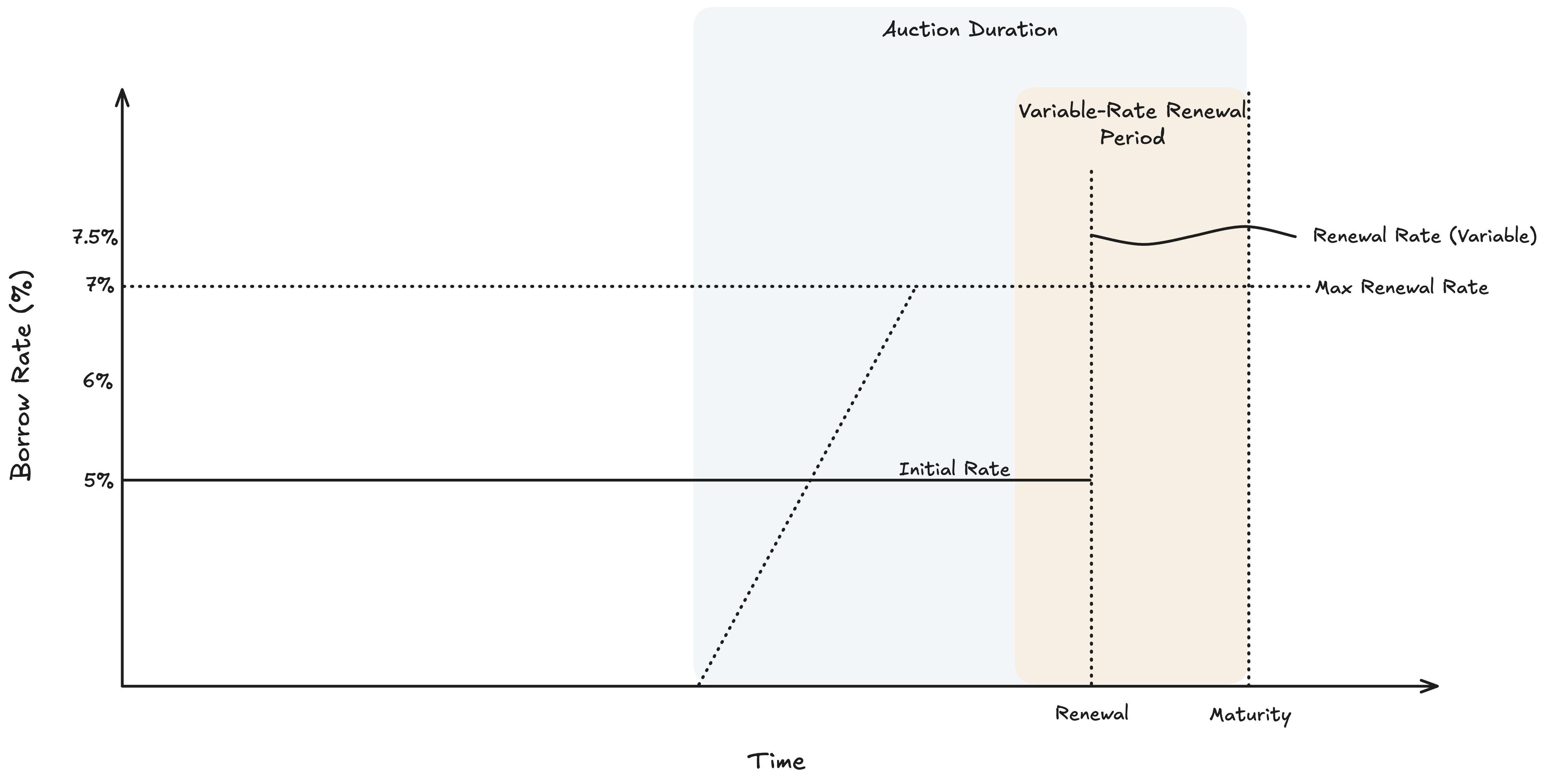
The image below illustrates how a user can combine the two renewal mechanisms. In this example, the fixed-term, fixed-rate renewal auction starts first, if the position has not been renewed at a fixed rate due to lack of liquidity or renewal rates being above the user's maximum renewal rate by the time the variable rate renewal period begins, then a third party can renew the position into a variable rate open term position.